
Cheap Vinyl Flooring Singapore: How to Spot Real Value (Not Just Cheap)
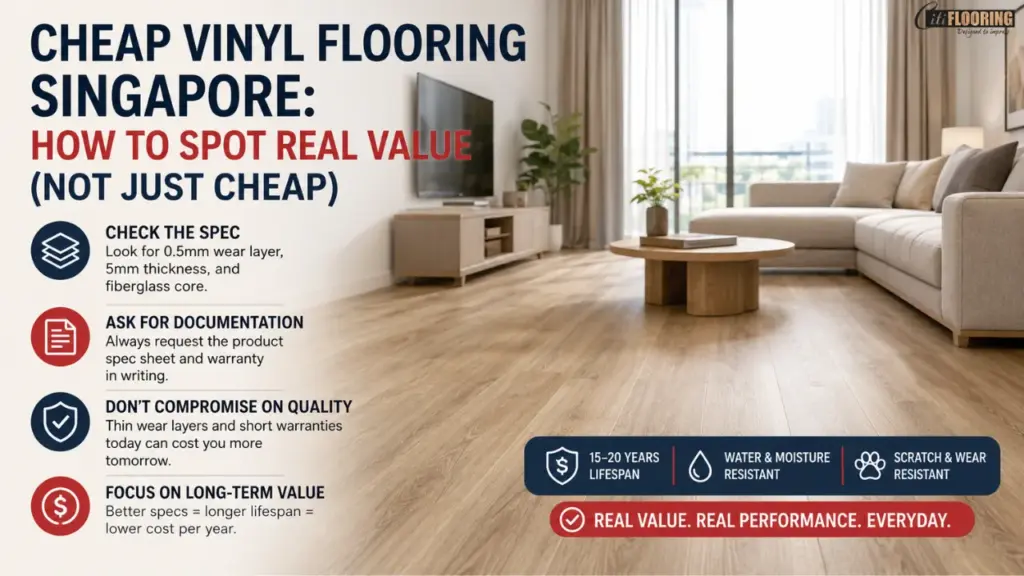
Understanding which is which before you buy is the only way to shop this category without regret.
Vinyl Flooring Prices in Singapore: 2026 Cost Guide
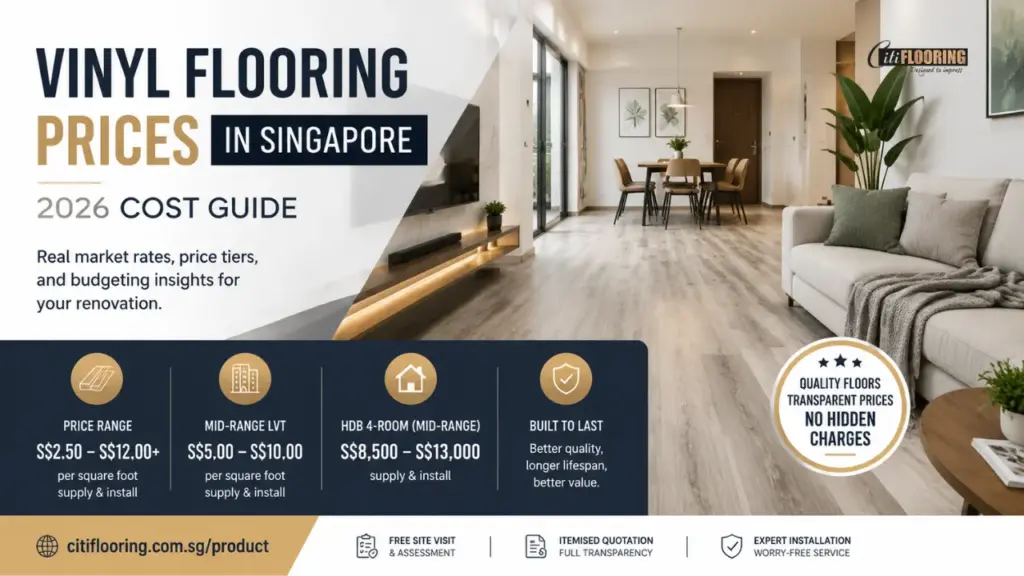
This guide gives you the actual market rate information for vinyl flooring in Singapore in 2026
Vinyl Tiles Singapore: Buyer’s Guide (2026)
Vinyl tiles are one of the most widely recognised flooring formats in Singapore, and one of the most misunderstood.
Vinyl Flooring Singapore: Complete Buyer’s Guide (2026)
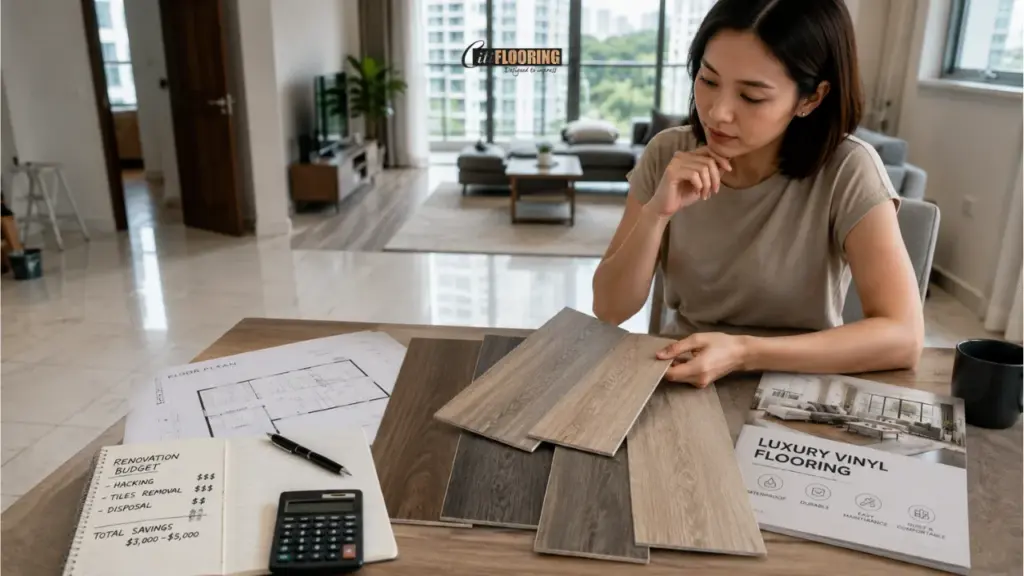
Vinyl flooring has become the dominant flooring choice for Singapore renovations, and it has earned that position.
Wood-Look LVT in Singapore: How Realistic Is It Really?
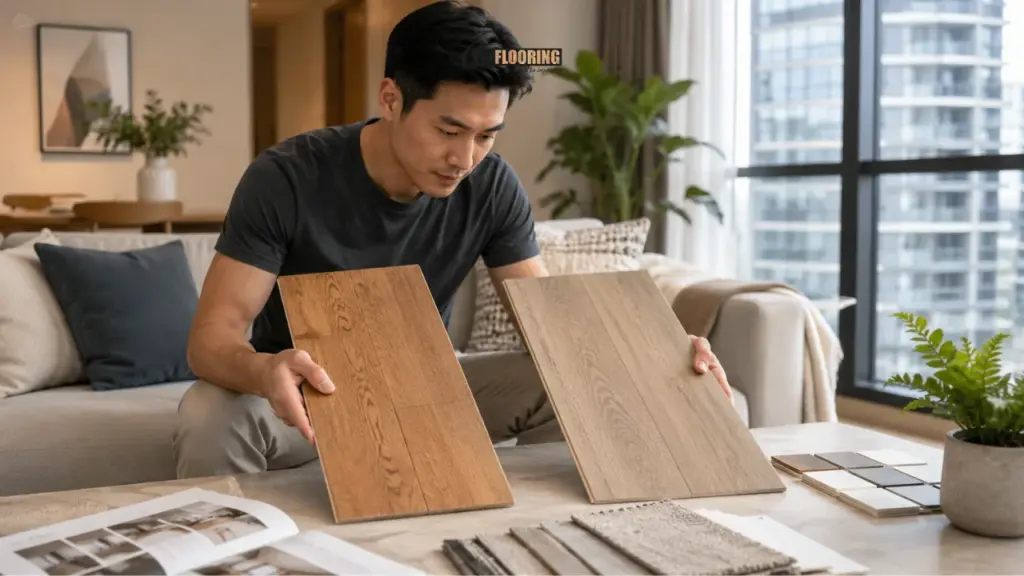
Understanding how contemporary wood-look LVT actually achieves its visual and tactile realism.
LVT Flooring Designs & Colours: Trending Looks for Singapore Homes (2026)

This article maps the leading 2026 LVT designs to the design moods driving them, Japandi, warm minimalist, organic modern, urban industrial.
Best LVT Flooring in Singapore: 2026 Honest Brand Comparison

A four-filter framework you can use on any LVT brand, show how the major Singapore options stack up against each filter, and finish with use-case-specific recommendations.
LVT Flooring Price in Singapore: Honest Cost Breakdown (2026)

This article breaks down LVT pricing in Singapore in 2026 the way we wish every quote would
Luxury Vinyl Plank Flooring Singapore: Prices, Brands & Where to Buy

Search luxury vinyl plank flooring in Singapore and you will find dozens of suppliers, hundreds of products, and a confusing patchwork of names: LVP, LVT, SPC plank, hybrid plank, rigid core plank. Most of them refer to the same general thing, a multi-layer vinyl plank that mimics wood, but the specs and prices differ in ways that matter once the floor is in your home. This guide gives you a no-fluff overview: what LVP actually is, how prices break down in 2026, which brands are worth considering, and what to ask before you commit. By the end, you should be able to walk into any showroom and tell premium from posturing in the first ten minutes. LVP vs LVT, What’s the Difference? LVP, Luxury Vinyl Plank, is LVT in plank format. Same multi-layer construction, same materials, same engineering principles. The format simply mimics a long wood board rather than a square stone tile. Both are subsets of the broader LVT category. Singapore suppliers use the terms loosely. Most use LVT as an umbrella that includes LVP. Some use LVP and LVT to differentiate between wood-look and stone-look products. When you read a supplier’s catalogue, focus on the spec sheet, not the label. The wear layer mil, the core type, and the IXPE backing are what determine quality, not whether the product is called LVP or LVT. Plank dimensions vary across products. A standard plank is 7 inches wide and 48 inches long. Wider planks (9 inches) and longer planks (60 inches) are increasingly popular in Singapore, particularly in landed homes and larger condos where the wider boards make rooms feel bigger. Wider planks usually cost 10-15% more per square foot but produce a more luxurious result in spacious rooms. For HDB flats, standard 7-inch planks are usually the right choice, they keep the proportion right in smaller rooms and align cleanly with most furniture. Wider planks in a 3-room HDB can actually look out of scale. Luxury Vinyl Plank Price in Singapore LVP pricing in 2026 follows the same three-tier structure as broader LVT, with a slight premium for wood-look décor films because the print fidelity matters more for wood (homeowners notice fake wood faster than fake stone). Tier Wear Layer Plank Width All-In Price (S$/sqft) Entry 12 mil 6“ – 7” S$3.80 – S$5.20 Mid (Core+) 18-22 mil 7“ – 9” S$5.50 – S$8.00 Premium 22+ mil EIR 9“ – 12” wide S$8.00 – S$13.00+ For a 4-room HDB flat (~900 sqft), a mid-tier LVP installation typically lands in the S$5,000 to S$7,500 range, including matching skirting and IXPE underlay. Hacking adds S$1,500 to S$3,000. When you compare LVP quotes, watch out for two common tricks. First, some quotes include only labour and material per square foot but omit skirting, transition strips, or doorway trims, these can add 8-12% to the final bill. Second, quotes labelled ‘premium’ at unusually low prices often quietly downgrade the wear layer or skip the IXPE backing. Always insist on a line-item breakdown. Top LVP Brands Available Locally Singapore’s LVP market splits into three groups. Each has a place depending on your renovation goal and budget. European imports (Quick-Step, Moduleo, Karndean), premium pricing (S$10-14/sqft all-in), strong EIR textures, long warranty. Best for design-forward landed and condo renovations. Lead times can be longer (4-6 weeks) for special-order items. Korean imports (LG Hausys, KCC, Eagon), strong mid-market (S$6-9/sqft all-in), excellent factory QC, broad colour range. Common spec in Singapore HDB renovations and increasingly popular for condo projects. Local Singapore lines (Citiflooring LVT Core+ and similar), curated mid-market with local warranty support, matching skirting in stock, and in-house install. S$5.50-8/sqft all-in. Lead times shortest (5-7 days for in-stock items). Generic regional imports, broad price range, inconsistent QC. Avoid unless you can verify the spec sheet and physical sample. The savings are usually outweighed by the risk of early failure or no warranty support. Within each tier, individual product lines vary. Quick-Step Largo is a different product from Quick-Step Impressive Ultra; LG Hausys Decotile is different from LG Hausys Decoclick. Always confirm the specific line and spec sheet, not just the brand name. Where to Buy LVP in Singapore Three main channels. Each has a trade-off. Specialist flooring showrooms, like Citiflooring, that stock samples, supply the product, and install in-house. Best for accountability and warranty support. The price is fully transparent and the supplier owns the entire chain from product to install. Renovation contractors and ID firms that source LVP through wholesale partners. Convenient if you are bundling the floor into a full renovation, but the contractor’s mark-up varies and you may not see the product spec sheet directly. Ask the contractor to disclose the supplier and product code so you can verify. Online suppliers and direct imports. Cheapest material cost, but no installation, no skirting matching, and no local warranty. Best only for experienced DIYers with strong subfloor prep skills. Most homeowners regret this route within a year. If you are renovating an HDB or condo for the first time, channel #1 (specialist showroom) is almost always the lowest-risk route. The price difference versus channel #2 is usually 5-10%, and you get direct accountability for material, install, and warranty. Channel #2 makes sense when you have a full-renovation contractor handling everything from demolition to defect rectification. In that case, the contractor takes accountability for the whole job. But if you are managing the renovation yourself, channel #1 reduces the number of moving parts you need to coordinate. How to Spot a Quality Plank Picking up a plank in a showroom and judging quality by feel is harder than it looks. Here are five physical tests to do before you commit: Run your fingernail across the surface in good light. Quality EIR has tactile wood-grain depth that your fingernail catches slightly. Print-only LVP feels smooth and plastic, no matter how realistic the photo looks. Flex the plank with both hands. A solid SPC core resists bending; a thin or under-spec core flexes noticeably. Excessive flex predicts joint
Luxury Vinyl Tile Singapore: Buyer’s Guide (2026)

Buying luxury vinyl tile in Singapore in 2026 is harder than it sounds. Every supplier calls their product luxury. Every quote uses the same vocabulary, wear layer, EIR, IXPE backing, but the actual specs vary wildly. And the price can swing 3x for what looks like the same thing in the showroom photo. This buyer’s guide is built for the homeowner who wants to understand the spec sheet before signing. We will walk through what the word luxury actually buys you, how to read a wear-layer number honestly, where prices land in 2026, and which suppliers are worth shortlisting. The goal is to give you a buyer’s checklist you can use anywhere, not just at our showroom, so you walk into your renovation decision with clear eyes. What ‘Luxury’ Means in LVT (Spec Breakdown) Luxury in LVT is not a marketing term, it has technical meaning. To be sold as luxury vinyl tile, a product needs three things at minimum: a wear layer (rather than just a clear coat), a printed décor film with realistic texture, and a rigid or semi-rigid core (rather than just a flexible vinyl sheet). What separates premium from mid from entry within the luxury category is the depth of each of those three layers. A 12-mil wear layer is luxury. A 22-mil wear layer is also luxury. They cost very different amounts and last very different lengths of time. The word alone does not tell you which you are buying. There are also marketing flourishes that do not change the underlying product. ‘Premium engineered LVT’ usually means the same thing as ‘LVT.’ ‘Hybrid plank flooring’ is typically WPC-core LVT. ‘Stone polymer composite’ is just SPC by another name. Always look past the label and ask for the spec sheet, wear layer in mils, core type in plain language, IXPE thickness in millimetres, and total plank thickness. Reputable Singapore suppliers print all of this on every product card. If a supplier hesitates to share the spec sheet or gives you a vague answer like ‘our LVT is high-quality imported,’ treat that as a signal. Premium products have measurable specs and the suppliers behind them are happy to publish those specs. Wear Layer, Core, and Backing, What to Check Three numbers determine whether your LVT will hold up. Read them carefully on every quote and compare them like you would compare phone specs. Wear layer (mil): 12 mil = light residential, 18-22 mil = family residential, 28+ mil = commercial. For a Singapore family home with pets or children, 18 mil is the minimum we recommend. The wear layer is the single most important spec, it determines how the floor ages over a decade. Core type: SPC (stone-plastic) is rigid and waterproof; WPC (wood-plastic) is slightly softer and warmer. LVT Core+ uses a refined SPC core for residential use, with the IXPE backing providing the comfort layer that pure SPC tends to lack. Backing: IXPE cross-linked polyethylene is the gold standard for acoustic underlay. It should be pre-bonded, not loose. Look for IXPE 1.5 mm minimum. EVA foam, an older alternative, is cheaper but less stable in humidity and breaks down faster. If the spec sheet leaves any of these blank, the product is probably an unbranded import with no consistent quality control. That is not where you want to buy a floor that needs to last a decade. The few dollars per square foot saved upfront will be eaten back in early replacement or repairs. A useful technique when comparing two quotes: print both spec sheets side by side and circle the differences. Often you will discover that what looked like the cheaper quote is using a 12-mil wear layer where the other quotes 22-mil. The price difference suddenly makes sense. Luxury Vinyl Tile Price Tiers in Singapore LVT pricing in Singapore in 2026 settles into three tiers, with substantial overlap between them. Below is the supply-only pricing, install adds roughly S$2 to S$3 per square foot depending on the preparation work required. For overlay installations on existing HDB tile, install costs are at the lower end; for full hacking and re-screeding, expect the upper end. Tier Typical Spec Material Only (S$/sqft) All-In (S$/sqft) Entry 12 mil, basic core, separate underlay S$2.20 – S$3.50 S$3.50 – S$5.00 Mid (Core+) 18-22 mil, IXPE bonded, EIR texture S$3.50 – S$5.50 S$5.50 – S$8.00 Premium 22+ mil, refined EIR, branded import S$5.50 – S$8.50 S$8.00 – S$12.00+ Note that quotes outside this range usually mean one of two things: either a contractor is hiding the wear layer to look competitive, or the supplier is inflating the brand premium. Either way, ask for the spec sheet before you accept the quote. When budgeting a renovation, multiply by your flat’s effective floor area. A 4-room HDB at around 900 sqft in mid-tier LVT lands at roughly S$5,000 to S$7,200 all-in. A 5-room HDB at around 1,100 sqft lands at S$6,000 to S$8,800. Add S$800 to S$1,200 for matching skirting across the typical perimeter. Hacking, if needed, adds another S$1,500 to S$3,000 depending on the contractor. Top Brands & Where Citiflooring Fits Singapore has a healthy mix of imported European LVT brands, regional brands from Korea and China, and local Singapore lines that source from selected manufacturers and stand behind their own spec. Each tier has its place, and choosing well depends on what trade-off you are willing to accept. European premium imports, typically 22-mil wear layer with refined décor films. Strong on aesthetics and long-term warranty support. Price tends to land in the S$10 to S$14 per square foot all-in range. Best fit for landed homes and design-forward condo renovations where budget is not the constraint and the buyer values the imported provenance. Korean and Chinese mid-market, wide selection, fast lead times, decent specs. Quality varies by supplier. Price typically S$5 to S$8 per square foot all-in. Best fit for HDB and standard condo renovations. Ask the supplier where exactly the product is manufactured and which factory they source
